Engineered to pass international mechanical pull tests, heavy laundry processing, and environment compliance standards.
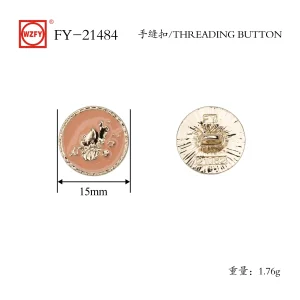
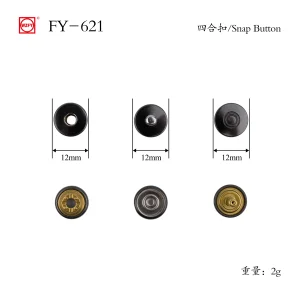
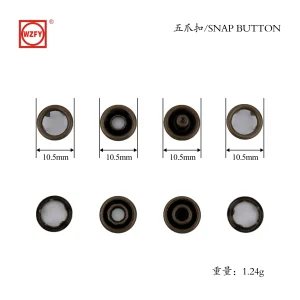
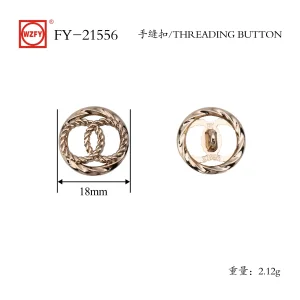
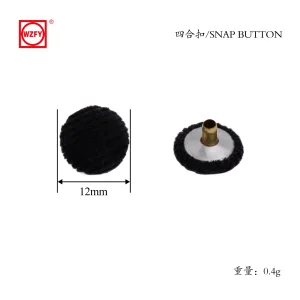
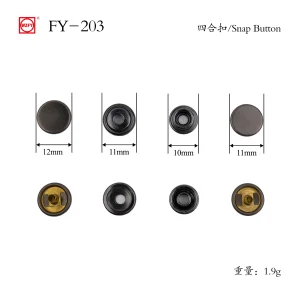
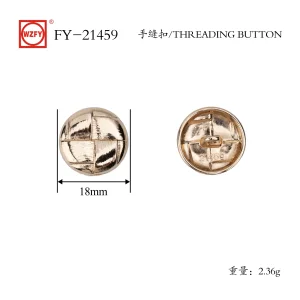
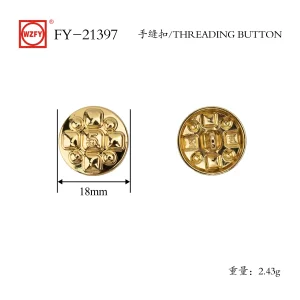
In the contemporary global manufacturing landscape, heavy-duty fastening systems represent much more than simple closure mechanisms. They are safety-critical and style-defining hardware, integral to the construction of workwear, premium denim, high-performance tactical gear, luxury luggage, and children’s clothing. Globally, the demand for brass rivet buttons is propelled by the dynamic shifts in raw materials, supply chain localization, and increasingly stringent environmental compliance protocols.
Brass (specifically alloys of copper and zinc) remains the gold standard in premium hardware engineering. Its innate physical properties—specifically high resistance to oxidation, outstanding malleability during cold forming, and natural antimicrobial tendencies—make it far superior to cheaper iron or basic zinc alloy substitutes. Throughout history, metal closures in high-strain zones, like pocket corners and fly closures in denim wear, have relied on rivet-and-button assemblies to prevent fabric tearing. Today, as global brands shift towards circular design principles, the high recyclability of pure brass elements reinforces its position as the premier material for sustainable garment trims.
Industrial procurement data indicates a substantial surge in demand for anti-corrosion, nickel-free, and lead-free metal trims across the Asia-Pacific region, North America, and Europe. This shift is primarily governed by the EU's REACH regulation and the Consumer Product Safety Improvement Act (CPSIA) in the United States. Modern hardware suppliers must adapt by altering their plating chemistries to avoid restricted substances while preserving mechanical durability.
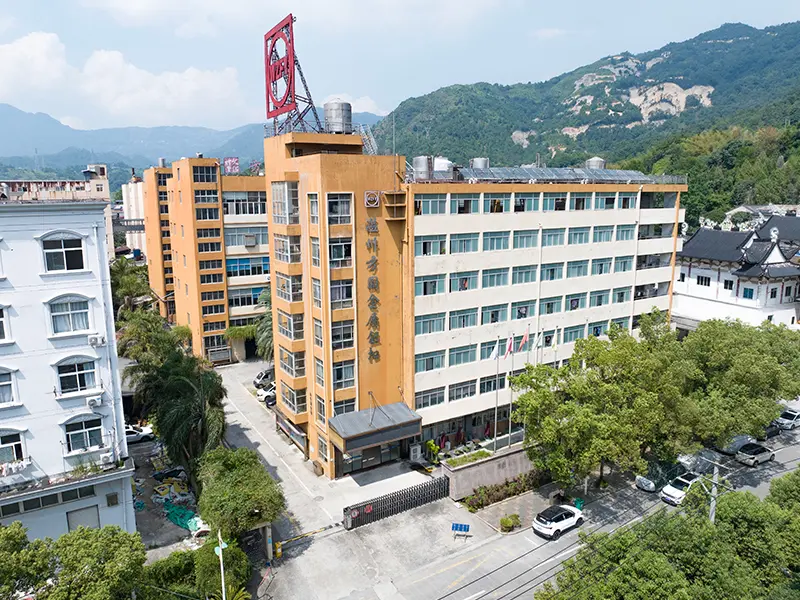
Established in 1995 and headquartered in Qiaotou, Wenzhou—universally recognized as China’s largest and most technologically integrated button production base—our enterprise stands as a pillar of manufacturing sophistication. Nestled inside Wenzhou's specialized industrial zone, Fangyuan Metal Button occupies over 15,000 square meters of highly automated engineering space.
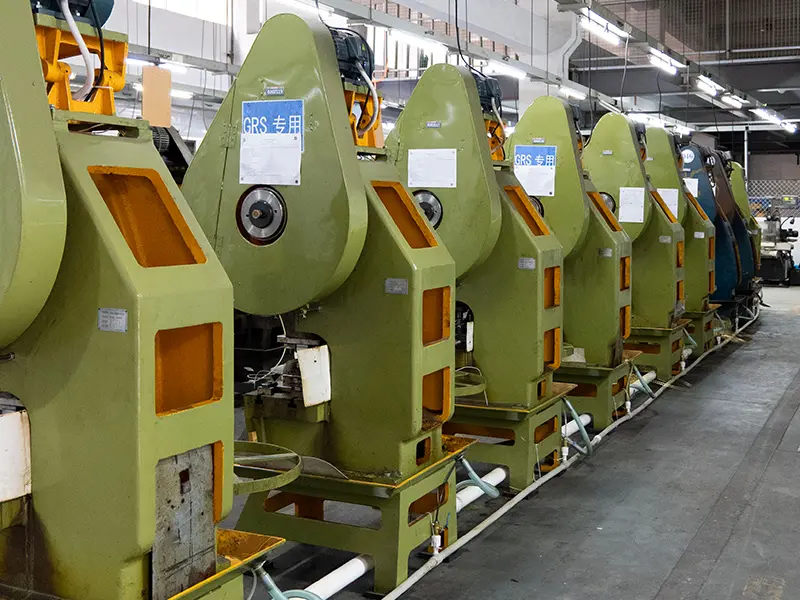
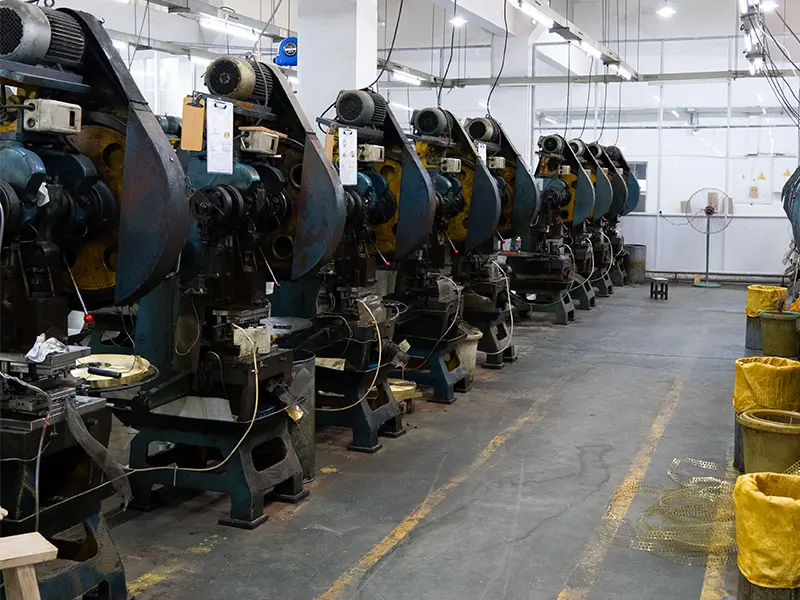
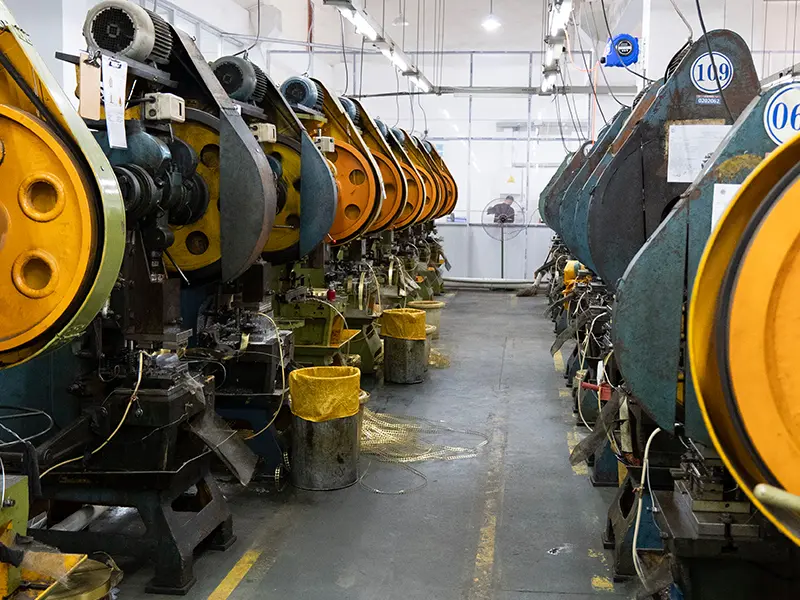
We house a dedicated workforce of over 500 professionals, which includes an engineering and management core of 90+ senior technical specialists. Operating with an annual output value exceeding 100 million RMB and holding independent import/export authorizations, we deploy advanced raw material casting, high-speed multi-station stamping presses, and eco-friendly electroplating lines directly inside our facility.
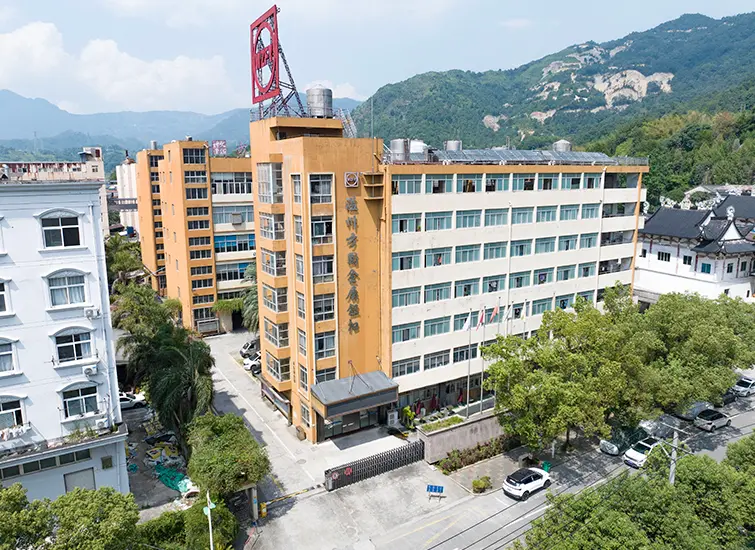
The concentration of metal trim manufacturing in Wenzhou yields unmatched supply chain integration. Wenzhou’s industrial cluster benefits from immediate proximity to high-purity copper refineries, specialized tooling design studios, and heavy-capacity logistic ports. This spatial density lowers procurement lead times and significantly reduces shipping logistics costs.
Chinese factories have historically led the volume market, but contemporary leaders like Wenzhou Fangyuan have engineered a shift toward high-tech customization. Leveraging multi-station progressive die presses, CNC wire EDM mold fabrication, and automated optical sorting systems, we ensure dimension variances are kept under 0.05 mm. This standard is critical for garment manufacturers utilizing high-speed automatic rivet setting machines on their production lines.
Our client engagement cycle is built on technical transparency. We request layout and density profiles of target fabrics to run digital pressure simulations. Using these simulations, we engineer specialized post profiles, ensuring optimal fabric displacement and minimizing fabric thread shearing. This tailored engineering cycle reduces post-purchase field failures, where button heads snap off during rigorous retail wash cycles.
Explore Wenzhou Fangyuan's primary product categories, optimized for extreme environments and industrial wash cycles.
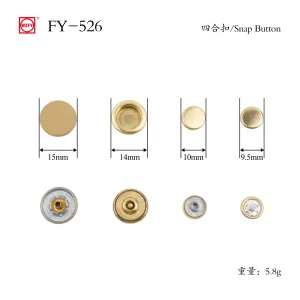
Manufactured using premium copper and brass alloys. Available configurations range from 7.5mm up to 21mm. Certified nickel-free and lead-free electroplated finishes available including antique brass, gunmetal, and polished gold. Ideal for rugged outerwear and performance gear.
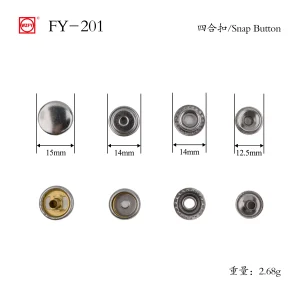
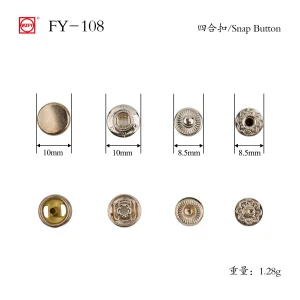
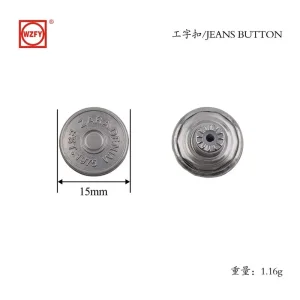
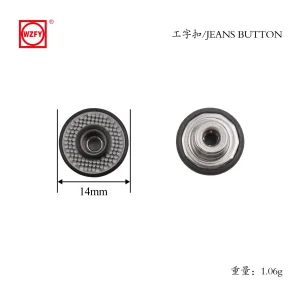
Constructed from high-tensile brass wire. Designed to endure harsh industrial enzyme and stone washing processes. These dual-component assemblies stabilize pocket edges under structural load and resist pull-out forces, retaining aesthetic appeal over time.
Designed with rolled edges to prevent fabric tearing or splitting post-press. Ideal for ventilation in sportswear, drawstrings, and luggage reinforcements. Engineered to seat cleanly on automatic press dies for seamless high-speed factory integration.
A deep understanding of industrial fastening requires a close look at structural variations. Below, we outline Wenzhou Fangyuan's key sub-product classes, detailing the engineering behind their applications.
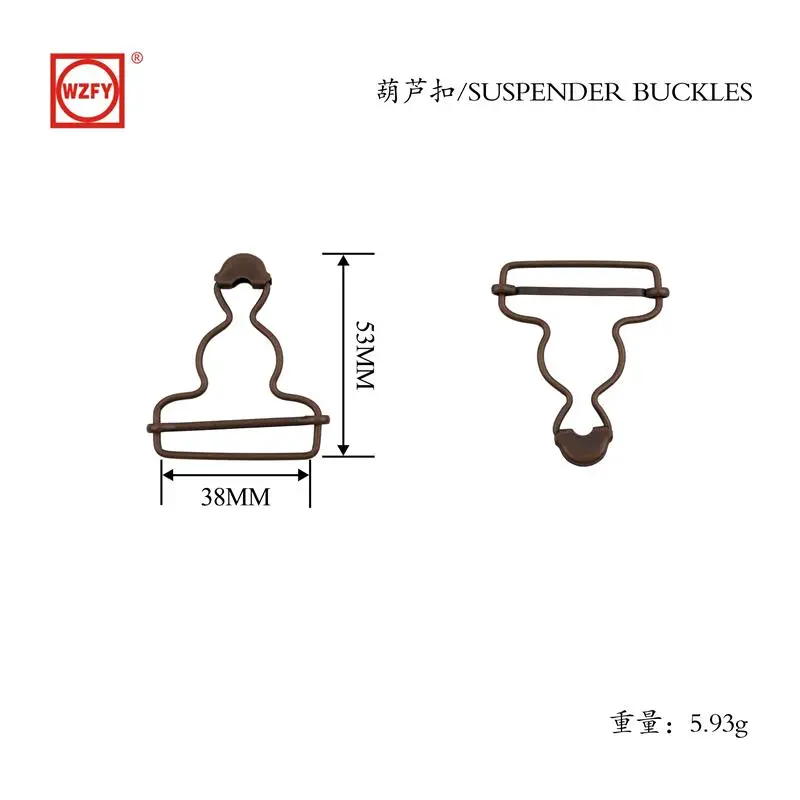
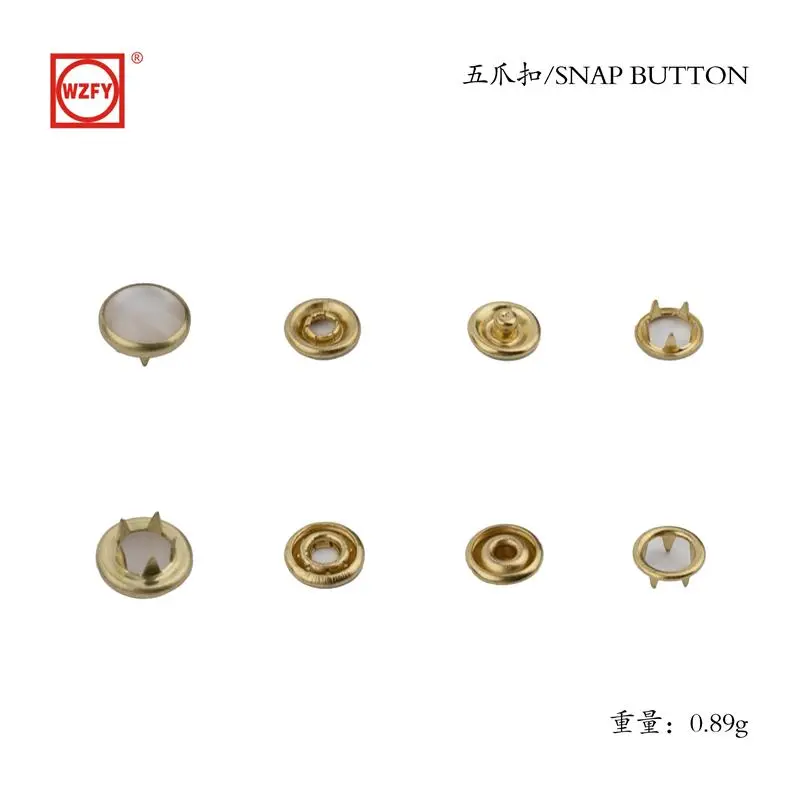
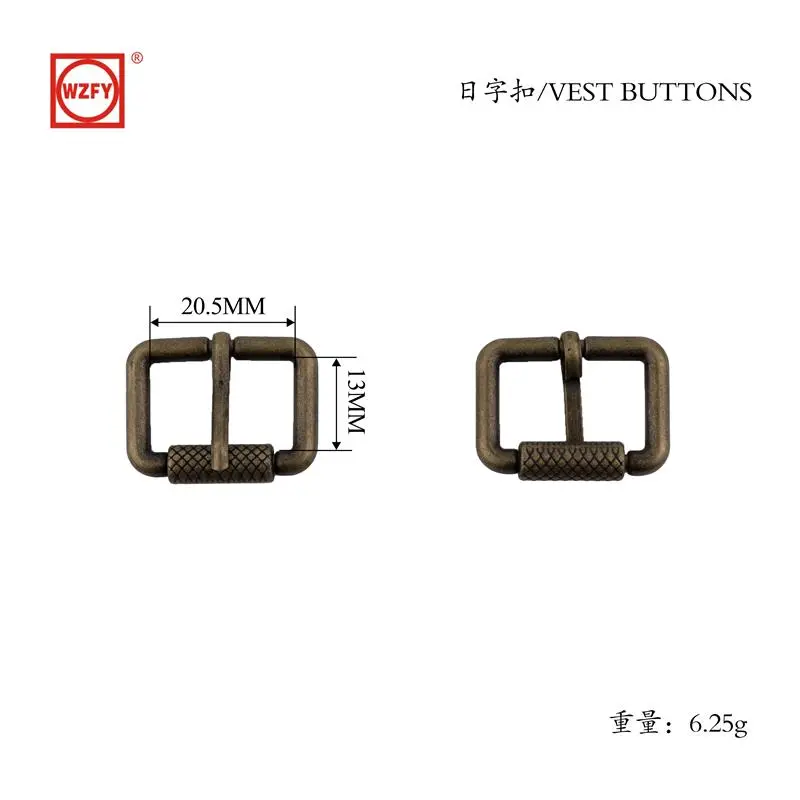
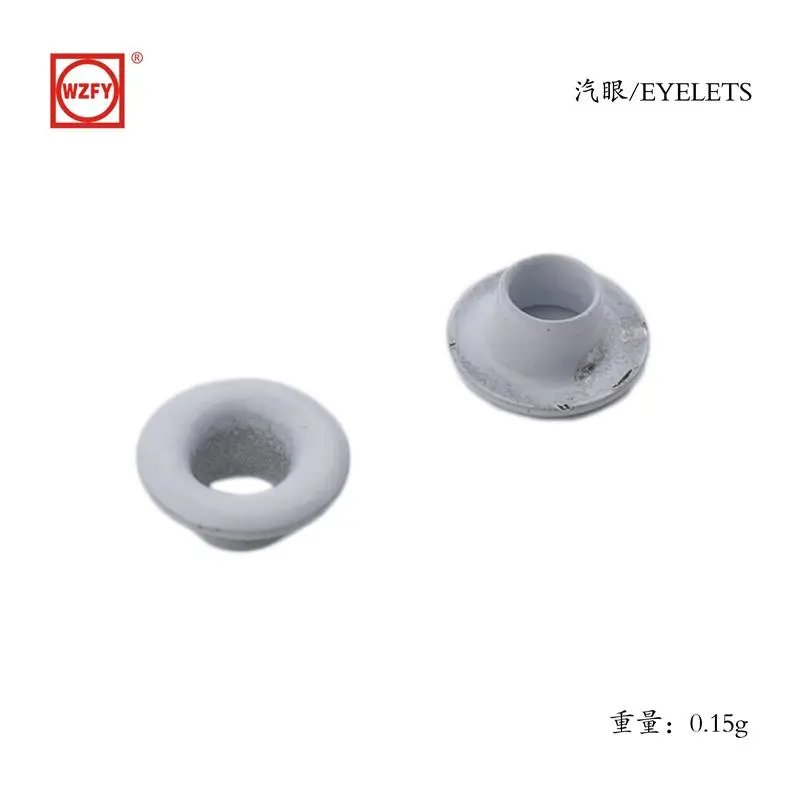
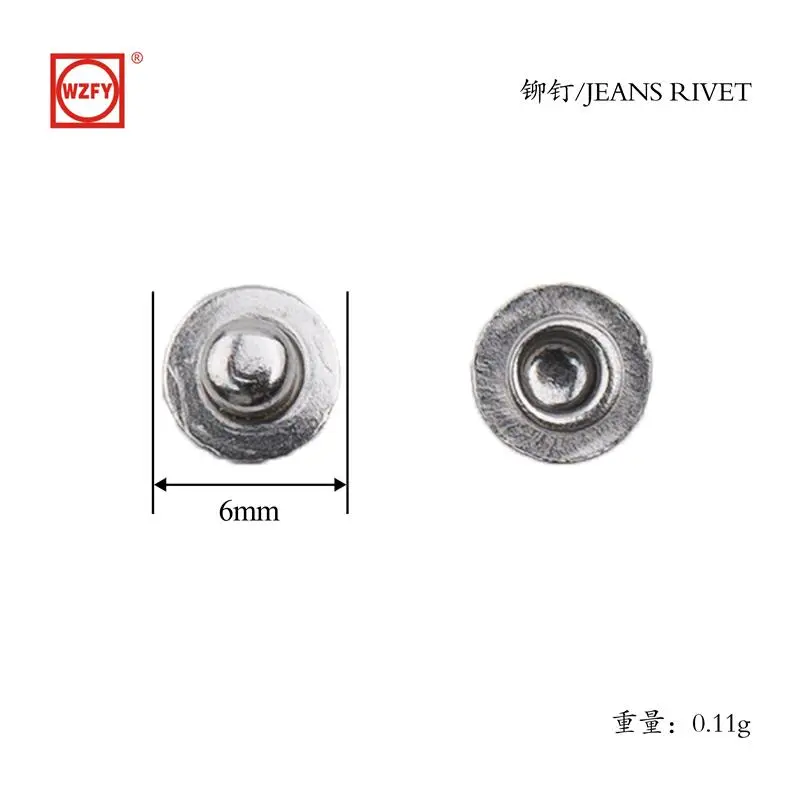
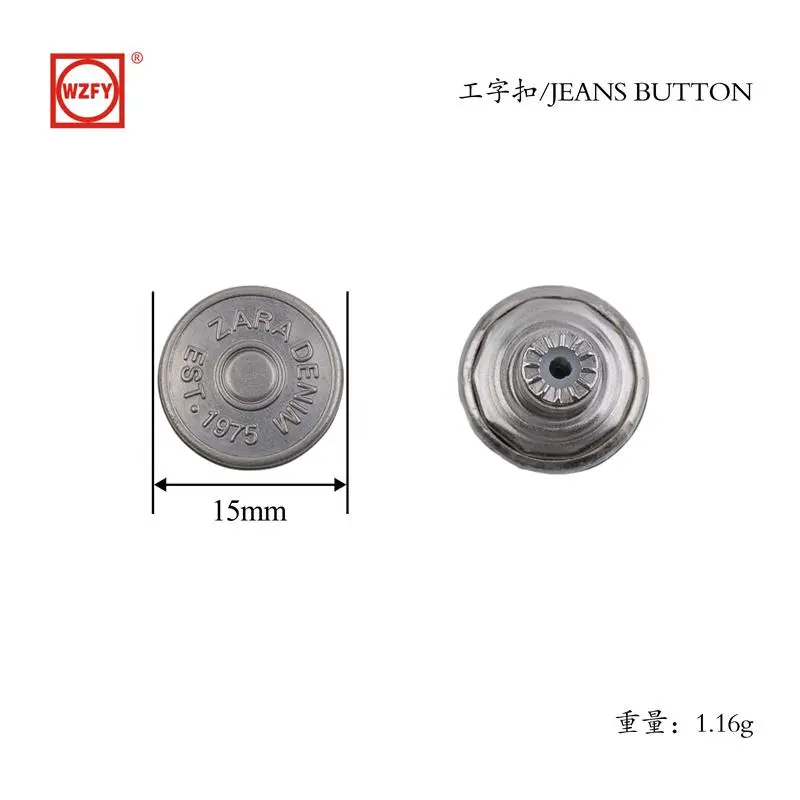
Different garment categories require distinct fastener engineering. We optimize each component to meet these specialized requirements.
Shirt buttons prioritize ease of closure and security, maintaining clean alignment of the front placket under normal wear tension.
Luggage components focus on load distribution and high pull-out force limits, ensuring reliable performance under travel stresses.
Suit buttons focus on aesthetic compatibility and dimensional accuracy, helping to define the garment's profile and formal styling.
Leather jackets require sturdy, high-clearance posts and corrosion-resistant plating to reliably pierce and secure heavy skins.
Windbreaker components balance windproof closure functionality with lightweight construction, suitable for technical outdoor applications.
Sweater closures feature soft backings and rounded shapes to prevent catching or tearing delicate knit fabrics.
For modern, tier-1 apparel brands, product quality goes beyond dimensional accuracy to include toxicological and environmental safety. Metal accessories placed on infant clothing must meet strict chemical limits. Substandard alloys containing excessive lead or nickel can trigger contact dermatitis and cause products to fail customs import inspections.
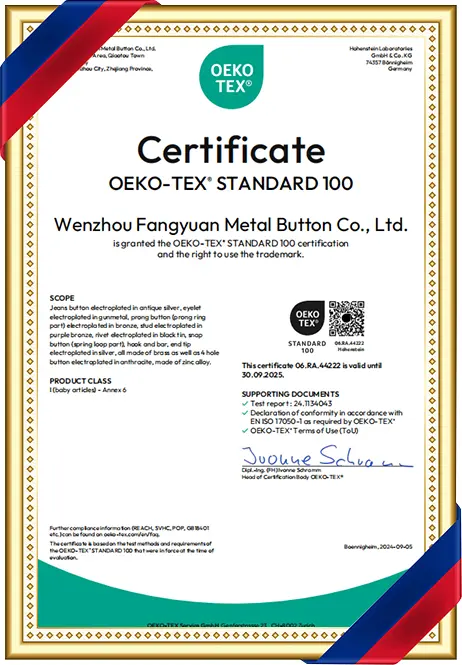
Wenzhou Fangyuan Metal Button Co., Ltd. operates with a strong focus on compliance. Our processes are certified under the ISO9001:2008 international quality system and the ISO14001:2004 environmental management standard. Additionally, our products carry the EU environmental label Oeko-Tex Standard 100 Class I authorization, certifying they are safe for direct contact with infant skin.
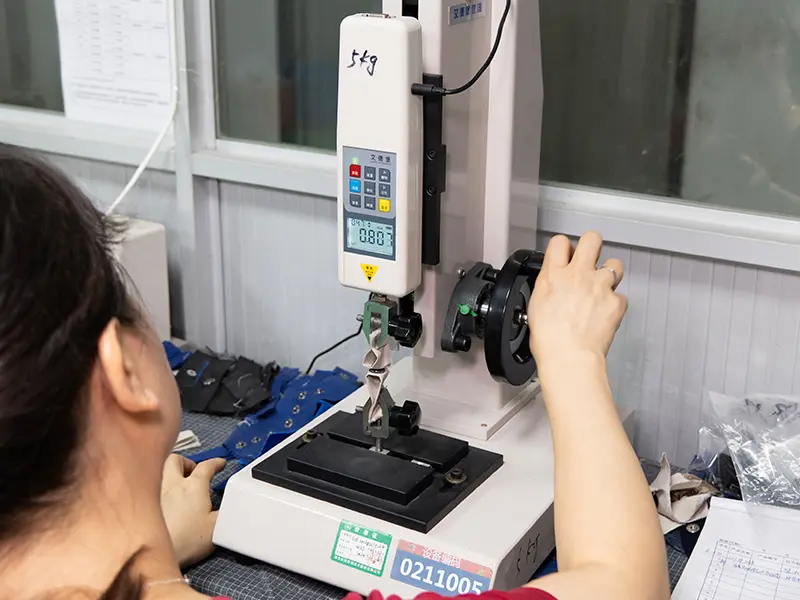
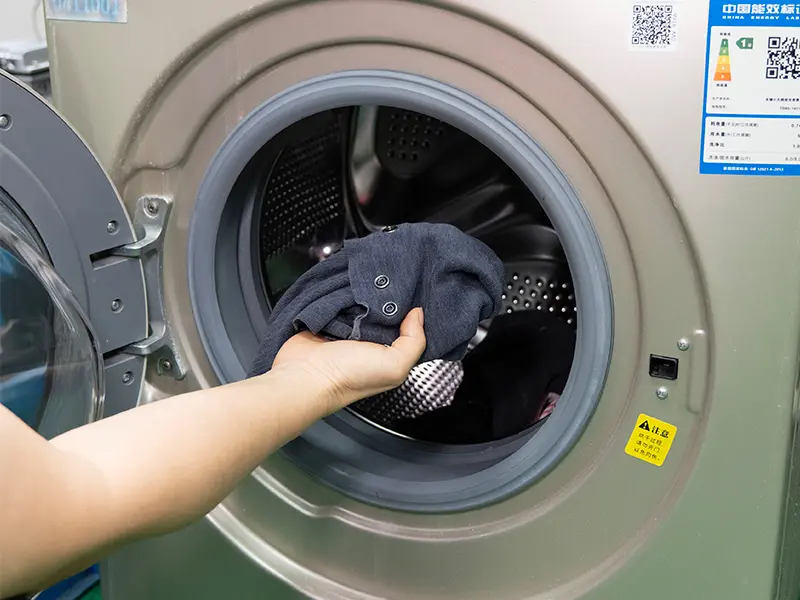
Every product batch undergoes continuous mechanical testing on calibrated tensile equipment. We perform spring fatigue tests, checking snap action over 5,000 cycles, and measure lateral sheer forces on button caps to confirm they meet safety requirements for retail sale. This testing is particularly critical for baby and children’s clothing, where loose fasteners pose a potential choking hazard.
Wenzhou Fangyuan operates in compliance with strict international quality, environmental, and consumer safety standards.
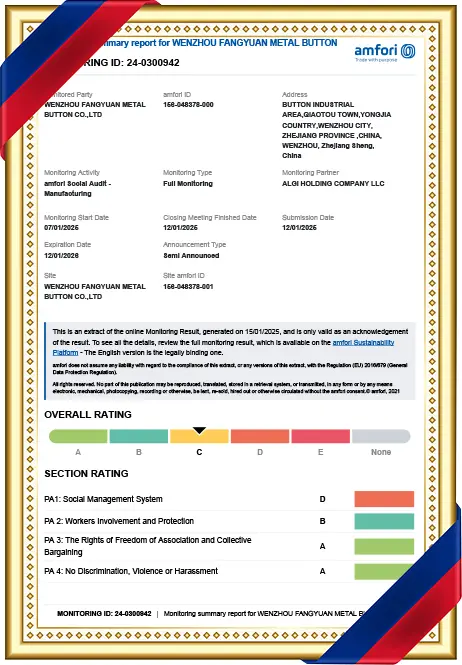
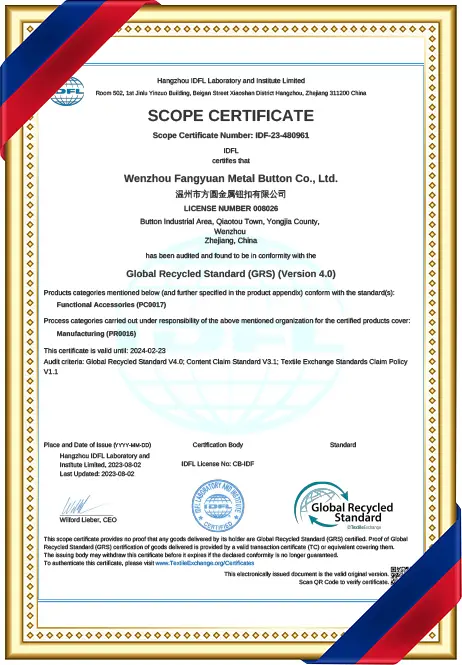
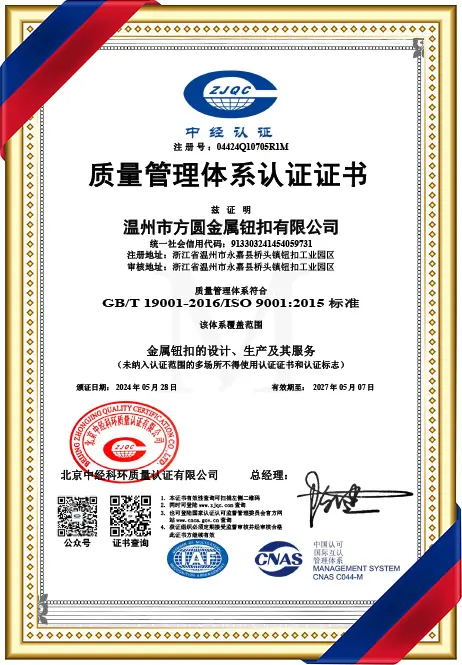
Step inside Wenzhou Fangyuan's specialized facilities to view our automated production lines and quality inspection systems.
To assist global sourcing teams, we outline the key stages of our engineering and procurement cycle below. This structured process helps ensure product reliability and efficiency from initial design to final delivery.
Buyers submit digital files (DXF/STEP) or physical fabric samples to our engineering team. We review the fabric's GSM (grams per square meter) and thickness profiles to determine the necessary dimensions for the button post or rivet prong. This step is critical to preventing mechanical failure during final assembly.
We produce initial prototypes using CNC machinery. These test items undergo salt-spray exposure testing (ASTM B117 standards) and 90-Newton shear pull testing. Once the physical samples are verified, they are sent to the client for final on-garment testing.
Upon sample approval, we initiate volume production. The manufacturing run is monitored using automated optical inspection (AOI) equipment. These optical sensors scan for dimensions, engraving depth, and plating defects, minimizing manual inspection errors.
Get answers to common technical, metallurgical, and logistical questions regarding brass rivet buttons and fasteners.
Brass (primarily a copper-zinc alloy) offers superior rust resistance, cold-working properties, and mechanical strength compared to zinc. Unlike cast zinc alloys, which can contain tiny internal air pockets that lead to fracturing under tension, brass components are stamped from high-purity metal sheets or drawn wires. This cold-formed structure allows the parts to easily withstand the physical stresses of industrial wash cycles and daily use.
We verify our compliance through regular testing and certifications. Our production lines carry the Oeko-Tex Standard 100 Class I certification, indicating our products are safe for direct skin contact, including infant apparel. We use high-purity copper and specialized alloy plating methods to ensure our fasteners remain free of lead, nickel, and other restricted heavy metals.
Our standard order minimums vary by material to maintain efficient production runs. For iron-based fasteners, our MOQ is set at 50,000 pieces. For premium brass and stainless steel assemblies, the MOQ is 20,000 pieces. These minimums ensure we can dedicate the necessary manufacturing and quality control resources to each production run.
We work with clients to match our fasteners to their specific fabric parameters. Sourcing teams send us fabric swatches so we can measure weight and compressibility. Based on these dimensions, we select the correct prong length and post style. Using the proper post dimensions helps prevent both loose fitment and fabric tearing at high-strain points.
We offer a wide variety of surface treatments, including chemical electroplating, powder coating, enamel painting, laser etching, and physical engraving. Our classic finishes include nickel-free antique brass, copper plating, polished silver, and matte gunmetal. All of our plating finishes are developed to resist fading, tarnishing, and corrosion from laundry detergents.
Our typical production lead time is 14 to 21 days from final sample approval, depending on the complexity of the custom tooling. Located in Wenzhou, we have direct access to nearby shipping ports in Ningbo and Shanghai. This well-developed logistics network allows us to coordinate prompt sea, air, and land freight shipments to major apparel hubs worldwide.
Explore Wenzhou Fangyuan's heavy-duty snap buttons, multi-prong buckles, and structural fasteners.
 Fangyuan Metal Button